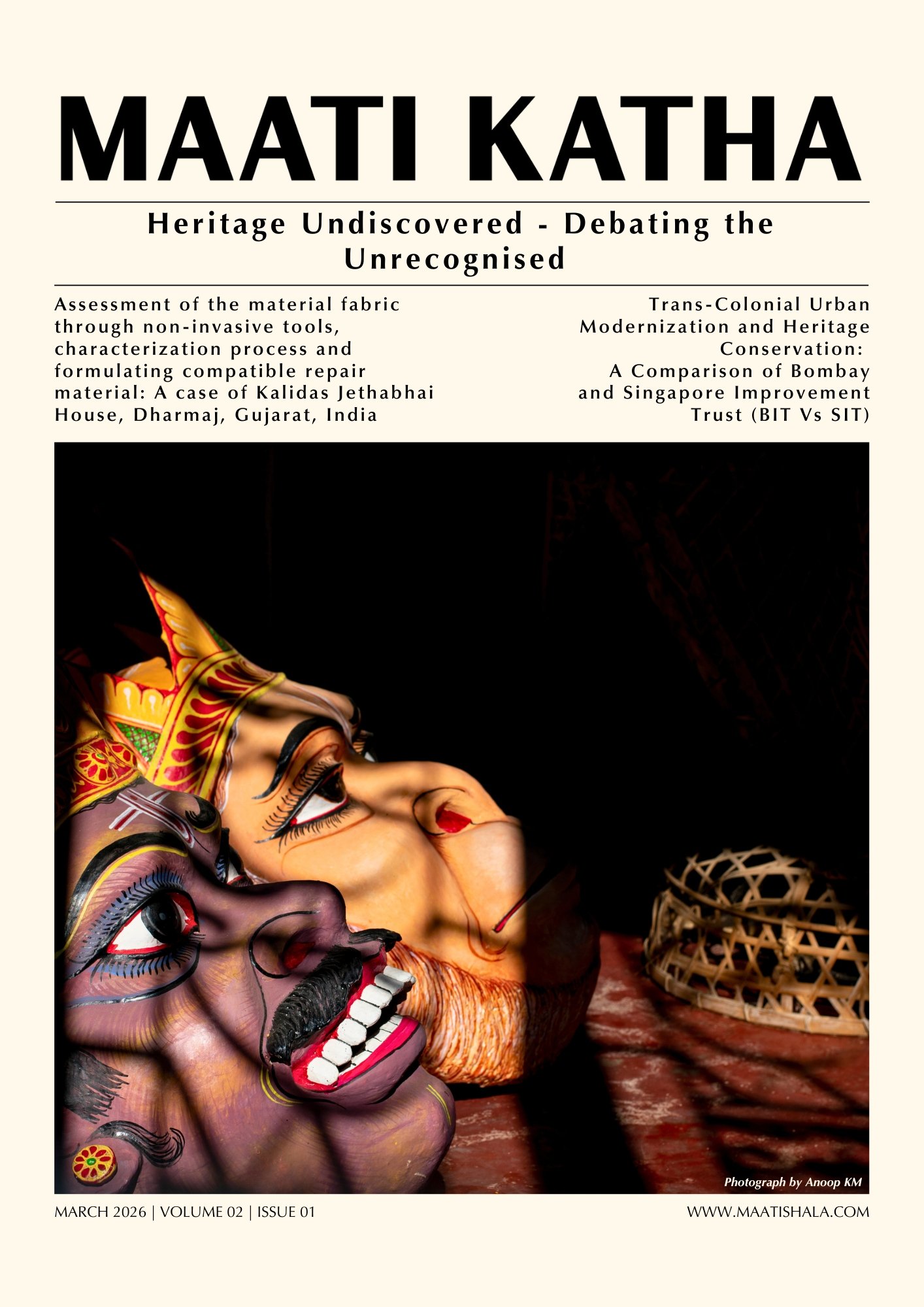
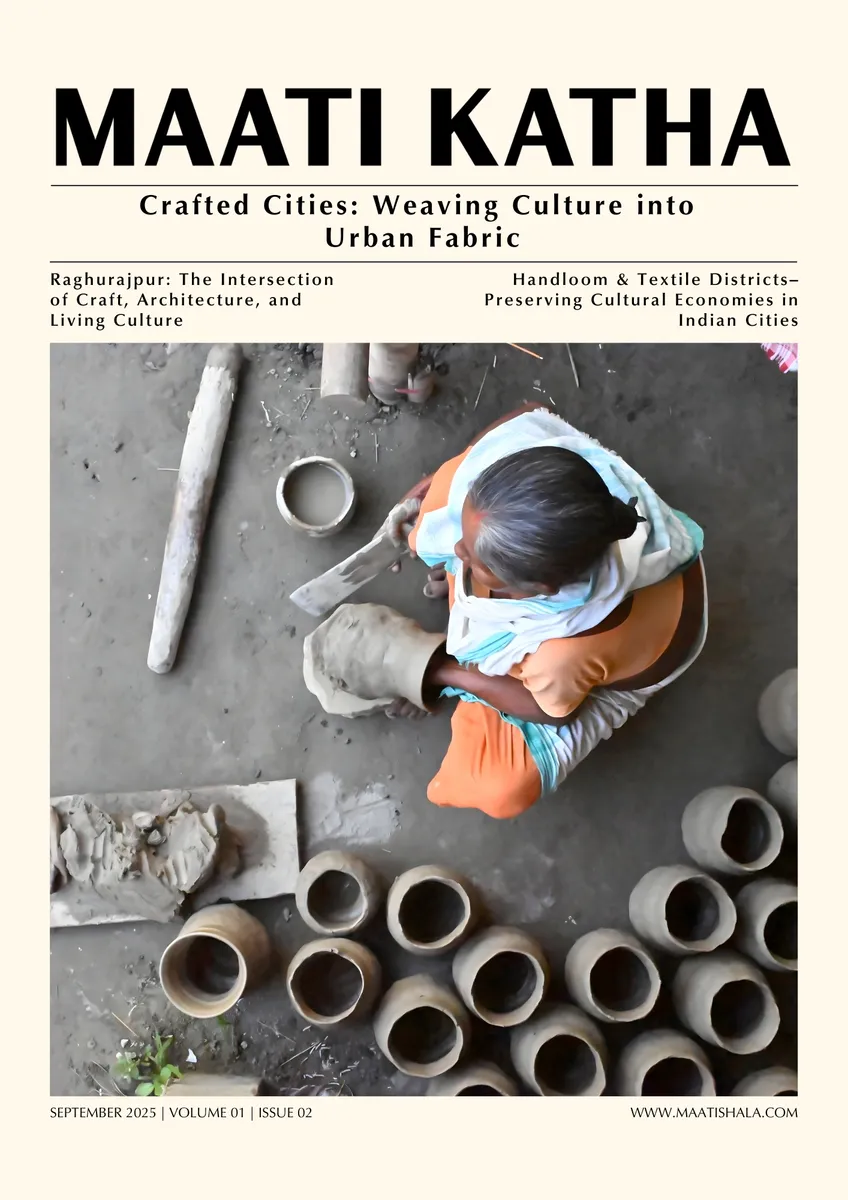
This issue explores the intricate relationship between traditional crafts and urban environments, showcasing how artisanal practices have influenced city planning, architecture, and community life. It delves into the ways cities integrate and preserve traditional craftsmanship, balancing heritage with modernity. The contributions emphasize the cultural and economic significance of crafts in shaping both the physical and social fabric of cities, highlighting strategies for their preservation, revitalization, and celebration in contemporary urban contexts.
₹700.00
Customer Reviews
★★★★★Rated 5 out of 5
MAATI is into some authentic work, lead by women entrepreneurs. I have good experience on their hands on workshop about learning cultural landscape and traditional architectural techniques in Majuli, Assam. This workshop connected me with traditional workers in Bamboo construction in order to learn this vernacular architecture organised by MAATI. They introduced us through a handson workshop to mask artists who shared their generational knowledge of mask making with locally available materials bamboo and river clay.
They also made the space very inclusive. This was a great experience exploring Majuli through MAATI.
★★★★★Rated 5 out of 5
I visited Majuli Island, Assam, and joined MAATI’s bamboo workshop in a serene setting. It offered insights into local culture and bamboo’s significance in daily life. The experience was unforgettable, enriching my skills and appreciation for bamboo craftsmanship. I recommend it to anyone exploring sustainable crafts. MAATI can further connect local artisans with designers to expand their reach.